Dog Blog!
I'm going to chronicle my dog training experiences, & post them here. I hope it will be beneficial for y'all!
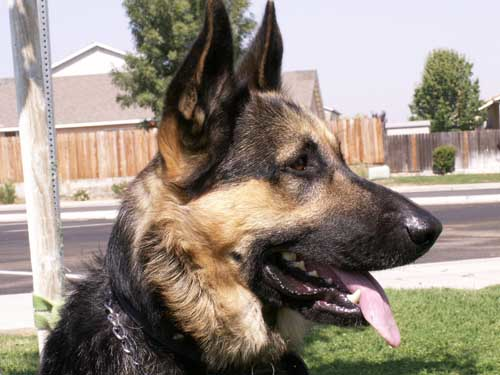
Hands Are Not Chew Toys (Yes, Even When He Is Cute)
Tuesday, September 15th - 4:20pm
Puppy teeth feel like sewing needles dipped in optimism. Mouthing is normal. Letting him rehearse on your hands is how you raise an adult who thinks skin is a teething ring. If you wrestle with your bare fingers & then get mad when he mouths the kids, you taught the curriculum. Cute is not a loophole.
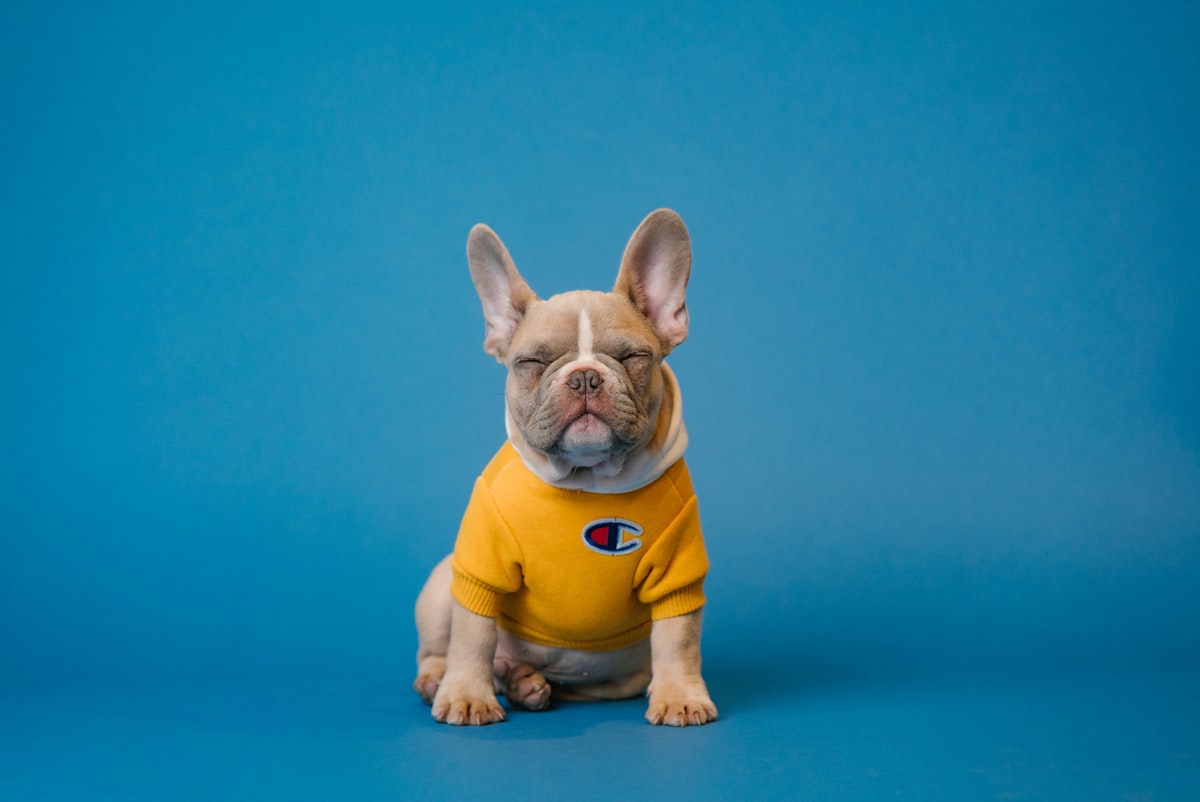
I interrupt mouthing the same way I interrupt bad chewing: stop the party, remove the hand, offer a legal chew, mark the switch with YES! If he gets gnarly, I stand up & leave for a few seconds — play ends. No long speeches. Puppies learn fast when teeth on humans make life boring & teeth on toys make life fun. Yelping like a littermate can help some pups; for others it fires them up. Read the dog in front of you.
Set the Game Rules
Pet when he is calm. Redirect when he is mouthy. Do not slap muzzles or turn it into a fight — that creates worse problems. Supervise kids. Soft humans who keep tickle-fighting with their hands will undo your work in one evening. Family summit time again.
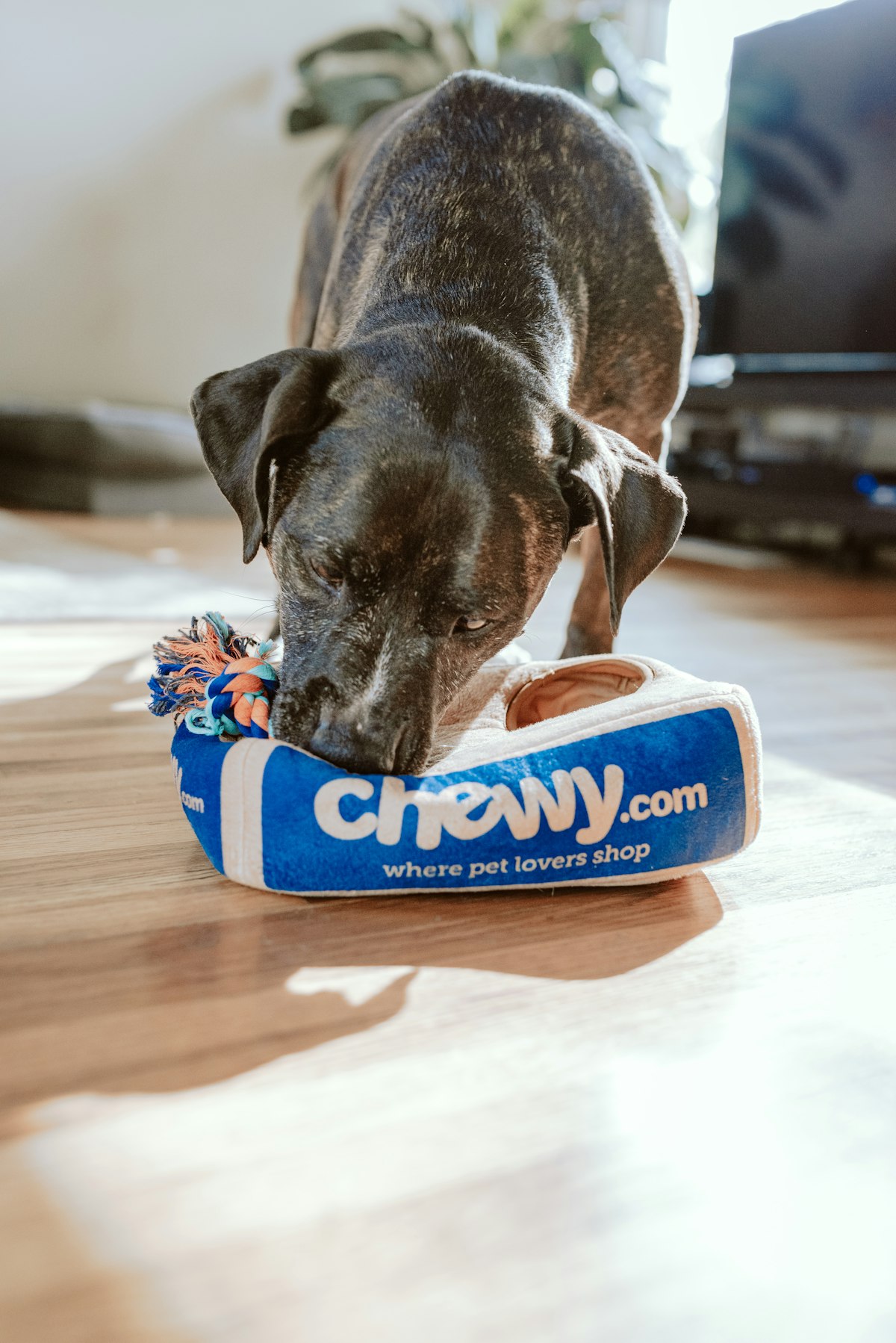
Tonight's Anti-Needle Protocol
- Stock chews everywhere you sit. Make the right thing easy.
- Mouth on skin → play pauses. Toy instead → YES!
- No roughhousing with bare hands. Use toys as the middleman.
- Kids get adult backup. They are not bite inhibitors.
Goes with puppy training & chewing posts. Your fingers have plans that do not include becoming a pacifier.
Hands are not chew toys. Interrupt, redirect, pay the toy, end the game when teeth show up — and stop signing autographs with your knuckles.
Photos in this post are from Unsplash (free to use).
The Car Is Not a Trampoline
Tuesday, September 15th - 3:55pm
A dog ricocheting between windows at 40 mph is not "loving car rides." It is unrestrained chaos with a blended risk of distraction, injury, & you practicing emergency braking because a tennis ball of fur landed in your lap. The car is a crate that moves. Treat it like one: calm entry, settled position, release when you say so — not when the first squirrel files a flight plan outside the glass.
I train car manners in layers. First, back seat or crate is just another place command — hop in, settle, YES!, chew or quiet reward. Short parked sessions with the engine off. Then engine on. Then around the block. If he screams, I am not rewarding the opera by instantly freeing him into Disneyland. I wait for a breath of quiet, mark that, then proceed. Same patience as crate training. Same refusal to let noise write policy.
Safety Is Part of the Lesson
Harness to seatbelt anchor, travel crate, or barrier — pick what fits your vehicle & dog. Loose dogs become projectiles. They also become steering-wheel consultants. Door manners apply: wait for OK before launching onto asphalt. The parking lot is full of bumpers that do not care about his joy.
Starter Road Map
- Practice getting in and settling while parked.
- Reward quiet. Do not pay the scream with immediate freedom.
- Restrain for safety. Training gear is not optional fashion.
- Release on OK. Doorways still are not starting guns.
Builds on crate & place work. More structure in basic training. Your insurance agent prefers boring passengers.
The car is not a trampoline. Teach settle, buckle the plan, mark calm, release on purpose — and keep the Iditarod off your dashboard.
Photos in this post are from Unsplash (free to use).
Say His Name Like It Means Something
Tuesday, September 15th - 3:30pm
If "BuddyBuddyBuddyBuddy!" is background noise in your house, his name no longer means "look at me." It means "humans are leaking sound again." Name recognition is the attention on-switch for every other command. Without it, sit, come, and leave-it are just words weather. I want one clean name → eyes on me → YES! → pay. Not a podcast of his name while he sniffs the couch.
I charge the name like a battery. Quiet room. Say it once. When he glances over, mark & reward. Repeat until his head snaps on the first syllable. Then add mild distractions. If he ignores a single clean name, I do not turn into an auctioneer. I close the distance, make the right choice easy, reset. Nagging teaches him to tune you out — the opposite of pack leadership.
Stop Poisoning the Cue
Do not use his name only when trouble is coming. If "Buddy" always precedes nail trims, baths, or scolding, you trained a flinch. Pair the name with good news most of the time. Corrections can have their own cue. The name should stay valuable — like recall money in the bank.
Attention Drills
- One name. Wait. Mark the look.
- Pay well at first. Make looking at you a jackpot.
- Never machine-gun the name. Say it once like you mean it.
- Use it before commands. Name → sit beats sit yelled into the void.
Foundation for everything in basic obedience commands. If he will not offer attention, the rest is theater.
Say his name like it means something — once, clearly, paid when he looks. Stop turning it into elevator music. Attention is the doorway; commands are just rooms after that.
Photos in this post are from Unsplash (free to use).
Teach Place: A GPS for "Go Park Yourself"
Sunday, September 13th - 6:50pm
Place (a bed, mat, or cot) is one of my favorite underrated commands. It means: go to that spot, stay there, chill, until I release you. Dinner guests stop being a contact sport. The doorbell stops being a starting pistol. You get to cook without a furry sous-chef surfing the counter. It is pack leadership with furniture.
I teach it like any other skill: boring room first. Point to the mat, lure or send, butt hits the mat, YES!, pay on the mat. Build duration. Then add mild distractions — me walking away, me opening the fridge, me pretending the Amazon guy exists. Release with OK. If he leaves early, no drama lecture — reset, make the mat pay better than freelancing in the hallway.
Why Place Beats "Just Go Lie Down Somewhere"
Vague vibes are not cues. A defined target gives his brain a job. Same idea as NILIF: structure creates calm. I use place during meals, Zoom calls, & anytime the house energy spikes. It is not exile. It is a clear assignment with benefits.
Starter Drill
- Send to mat → YES! → pay on the mat.
- Add a few seconds. Then a few more.
- Step away. Return before he fails.
- Release on purpose. OK means free — not "maybe."
Pairs with basic training & kitchen manners. A dog with a place command is a dog who can share a house without rewriting the floor plan.
Place is a GPS pin for calm. Teach it early, pay it well, use it when life gets busy — and stop hoping he invents good judgment during the lasagna.
Photos in this post are from Unsplash (free to use).
Doorways Are Not Starting Guns
Sunday, September 13th - 6:25pm
If the door opens and your dog launches like a furry bottle rocket, the doorway just trained him — not you. Threshold manners are pack leadership in a doorframe: you go first, he waits, then he gets OK. That is not drama. That is how you avoid flattened guests, escaped sprinting, & a dog who thinks every hinge squeak means the Iditarod.
I practice with a leash on at first. Hand on knob. If he crowds, door closes. If he sits or stands back, door opens a crack. YES! for the wait. Step through first. Release. Same script at the crate door, car door, backyard gate — consistency beats a TED Talk about "personal space." If Mom lets him blow the door and Dad does not, the dog votes for Mom's policy. We have covered that loophole.
Make Waiting Pay
The reward for waiting is access — the walk, the yard, the car ride. Do not bribe forever with a hot dog at the hinge; use food to teach, then let life pay. Mark the calm. Cancel the shove. Repeat until the door is boring. Boring doorways are safe doorways.
Tonight at the Front Door
- Leash on. Set the drill before real guests arrive.
- Crowding closes the door. No debate.
- You step out first. Then release.
- Same rule for every human. Softies included.
See pack leadership. The porch is not a starting block unless you say so.
Doorways are not starting guns. Teach wait, lead through, release on purpose — and stop letting hinges run your training program.
Photos in this post are from Unsplash (free to use).
Chewing Is Normal — Your Couch Is Not a Chew Toy
Sunday, September 13th - 6:00pm
Dogs chew. Puppies chew like tiny demolition contractors with optimism. The goal is not to delete the need — it is to aim it. If the only interesting textures in the house are chair legs and the remote, you have accidentally stocked a chew buffet of bad ideas. Then you come home, find the crime scene, and lecture a dog about 2 p.m. That lecture trains your face, not his molars.
I manage first: baby gates, crate when I cannot supervise, shoes up, trash closed. Then I stock legal outlets — sturdy chews, frozen washcloths for puppies, toys that survive. When I catch him on furniture, I interrupt, say leave it / Lass Es, park a legal chew in his face, YES! when he takes it. Catch him in the act. Redirect. Pay the right choice. Skip the archaeology of "who destroyed the ottoman while I was at work."
Exercise Helps. Guidance Helps More.
A bored under-exercised dog invents hobbies. A tired dog with no rules still invents hobbies — quieter ones, maybe, but still your baseboards. Combine movement, training games, and approved chews. Rotate toys so they stay interesting. If he guards chews, that is a separate conversation; do not free-shape resource guarding while you solve sofa crime.
Anti-Sofa Protocol
- Supervise or contain. Freedom is earned.
- Offer better legal options. Make the right chew easy.
- Interrupt and redirect. Within that 1.5-second window.
- Do not delay-punish. You will only teach him to fear homecomings.
Works with puppy training & leave-it. Your couch has rights. So does his need to chew — on the correct inventory.
Chewing is normal. Couch cuisine is optional. Manage the house, stock the legal buffet, mark the redirect — and stop holding court over crimes you did not witness.
Photos in this post are from Unsplash (free to use).
The Crate Is a Bedroom, Not a Jail
Thursday, September 10th - 4:00pm
If you only shove the dog in the crate when you are angry, congratulations — you built a timeout box with branding. Used right, a crate is a den: a place to chew, nap, ride in the car without becoming a furry projectile, & decompress when the house is chaos. Used wrong, it is how you teach him that closed doors equal doom. Dogs do not read your intentions. They read the pattern.
I introduce the crate like a good hotel room. Door open. Treats inside. Meals inside. Short closes with me nearby. YES! for calm. I do not crate him for eight hours on day one & then wonder why he is auditioning for opera. Puppies need potty breaks. Adults need a plan that matches their bladder & their brain. Firm-but-fair means the crate is safe — not a storage locker for problems you did not train.
Make It Pay
Stuff a chew that only appears in the crate. Cover three sides if he settles better. Ignore the protest noise that is just negotiation — but do not ignore a puppy who genuinely needs out. Learn the difference. If he is quiet & you only open the door when he screams, you paid the scream. Timing, again, is the whole sport.
House Rules for the Den
- Never use the crate as rage-mail. Cool down first. Train second.
- Feed & chew in there. Good things happen in the bedroom.
- Build duration slowly. Minutes before hours.
- Potty on a schedule. Accidents in the crate teach the wrong lesson fast.
Fits with puppy training & house rules. A dog who likes his crate is easier to travel with, easier to manage, & harder to turn into a demolition hobby.
The crate is a bedroom, not a jail. Teach it with food, calm, & patience — then use it as a tool, not a punishment. Your future self packing for a road trip will send a thank-you biscuit.
Photos in this post are from Unsplash (free to use).
Counter Surfing Is Not a Talent Show
Thursday, September 10th - 3:35pm
If the roast is on the counter & the dog is built like a spring, physics will win unless management & training show up. Counter surfing is not "clever." It is reinforced theft. One successful stolen sandwich teaches more than twenty lectures delivered after the fact — because lectures after the fact train your mood, not the crime. Remember the 1.5-second rule. The kitchen does not care about your feelings. It cares about leftovers at nose height.
I start with management because I am not a sucker: nothing edible left as bait while we train. Then I teach leave it / Lass Es, a solid down-stay on a mat during food prep, & NILIF so the kitchen is not a free casino. If he nails four-on-the-floor while I chop onions, YES! & pay. If he pops up toward the counter, I block, reset, make the mat pay better than the fantasy steak.
Set Him Up to Succeed
Practice with boring counters first — empty, then dull objects, then real food under control. Long line in the kitchen if he is young & athletic. Do not "see what happens" with a cooling pie unless you enjoy funding his hobbies. Prevention is not weakness. Prevention is how professionals keep chicken on plates & dogs out of urgent care.
Family Policy
- No feeding from the counter. Ever. Soft humans create tall thieves.
- Mat or place during cooking. Job beats freelancing.
- Leave-it pays well. Sidewalk pizza rules apply indoors too.
- Supervise adolescents. Hope is not a baby gate.
See basic obedience commands & leave-it work from earlier posts. Your sandwich has rights.
Counter surfing is not a talent show. Manage the buffet, train the mat, mark the good choices, & stop auditioning him for Ocean's Eleven: Kitchen Edition.
Photos in this post are from Unsplash (free to use).
Other Dogs on the Walk Are Not Automatic Meet-and-Greets
Thursday, September 10th - 3:10pm
Your dog does not owe every dog on the sidewalk a nose handshake. "He is friendly" yelled from twenty feet away is not consent, a training plan, or a personality transplant for the reactive shepherd on the other leash. Unplanned greetings create tangled leashes, bad manners, & sometimes teeth. Polite walking includes the skill of passing — not networking at a conference of sniffing.
I teach engagement with me first: name, sit, heel, treat for looking at my face when another dog appears at a distance he can handle. If he lunges & screams, we are too close — that is information, not failure. Distance is a training tool. We arc across the street, mark calm, move on. Forced meetups with random dogs teach gambling. Structured passes teach self-control.
Friendly Is a Behavior, Not a Hall Pass
Even social dogs can learn that charging into every labradoodle is rude. Ask before approaching. Respect "no." Keep moving if the other handler looks stressed. Your dog's social life can happen in planned play — not in the bike lane. Recall & leave-it matter here too: the other dog is just another distraction with fur & opinions.
On Today's Walk
- Reward looking at you when a dog appears. You are more interesting than the gossip.
- Cross early. Do not wait until he is already rehearsing opera.
- No automatic greetings. Permission only — both handlers.
- End on a win. Short session beats a mess you cannot scrub off the leash.
More in outdoor obedience. The sidewalk is a hallway. Hallways have traffic rules.
Other dogs on the walk are not automatic meet-and-greets. Teach passing, protect distance, ask before hellos, & keep your dog's brain on you — the pack leader who actually pays the treat bill.
Photos in this post are from Unsplash (free to use).
Jumping Is Cute Until Someone Wears the Coffee
Sunday, August 30th - 7:10pm
Puppy jumping looks like joy. Adult jumping looks like a linebacker who loves you. Guests get scratched. Kids get toppled. Your favorite shirt becomes modern art in light roast. If you laugh & pet him when his paws hit your chest, you did not "let it slide." You paid him in attention — the highest currency in dog economics.
I want all four paws on the floor before love happens. That is not cold. That is clear. When he jumps, I turn aside, remove the prize (me), & wait. The second those paws hit the ground I mark it: YES! then calm petting. If I mark late, I might reward the reboot jump. Timing matters. So does everyone in the house agreeing that jumping is not a greeting ritual.
Practice on Purpose
Do not wait for Aunt Linda to become the training dummy. Set it up: leash on, helper approaches, you ask for a sit, mark the sit, then the person says hello. If he launches, helper disappears like a magician with boundaries. Repeat until sitting through greetings is boringly reliable. Boring is the goal. Boring means safe.
Tonight's Homework
- No more rewarding the launch. Attention follows four on the floor.
- Ask for sit before petting. Every human. Especially the softies.
- Short drills at the door. Knock, sit, YES!, calm hello.
- Kids get adult backup. They should not be the crash-test dummies.
Pairs with pack leadership & basic training. Love him. Also protect the coffee.
Jumping is a conversation about what earns affection. Make the floor the jackpot. Make the chest a dead end. Your dry cleaner will write you a thank-you note.
Photos in this post are from Unsplash (free to use).
A Tired Dog Is Easier to Teach — Exhaustion Is Still Not a Lesson Plan
Sunday, August 30th - 6:40pm
Yes, a dog who has had a walk, a training game, & a chew is usually a better student than a dog who has been storing kinetic energy like a coiled spring since breakfast. Exercise helps. It is not a substitute for teaching. A wiped-out dog can still ignore sit. A rested dog with clear rules can look like a genius. Do not confuse "he finally crashed" with "he is trained."
I like a simple order: potty, a little movement, then a short training session while the brain is online — not after a two-hour fetch marathon when he is panting like a freight train & you are negotiating with a noodle. Five focused minutes beat twenty minutes of "why is he staring at that leaf instead of my soul."
Body Tired vs Brain Worked
Physical exercise burns fuel. Training builds skills. Puzzle toys, sniff walks, obedience games, & NILIF work the brain. Zoomies in the backyard alone often create an athlete with opinions. I want both: enough movement that he is not vibrating, enough structure that he knows how to earn what he wants. Schutzhund folks live this — drive without obedience is just chaos with better posture.
A Practical Daily Shape
- Morning: potty + short walk or play. Take the edge off.
- Then: 5–10 minutes of training. Sit, down, come, leash manners — mark cleanly.
- Daytime: chew or nap. Calm is allowed. Calm is golden.
- Evening: another short session or structured game. End while he is still winning.
More in basic training & outdoor obedience. Tire him kindly. Teach him deliberately.
A tired dog is easier to teach. An exhausted dog is just tired. Give him movement, then give him a lesson — not a marathon that replaces the homework.
Photos in this post are from Unsplash (free to use).
Leave It: Because the World Is Not a Buffet
Sunday, August 30th - 6:15pm
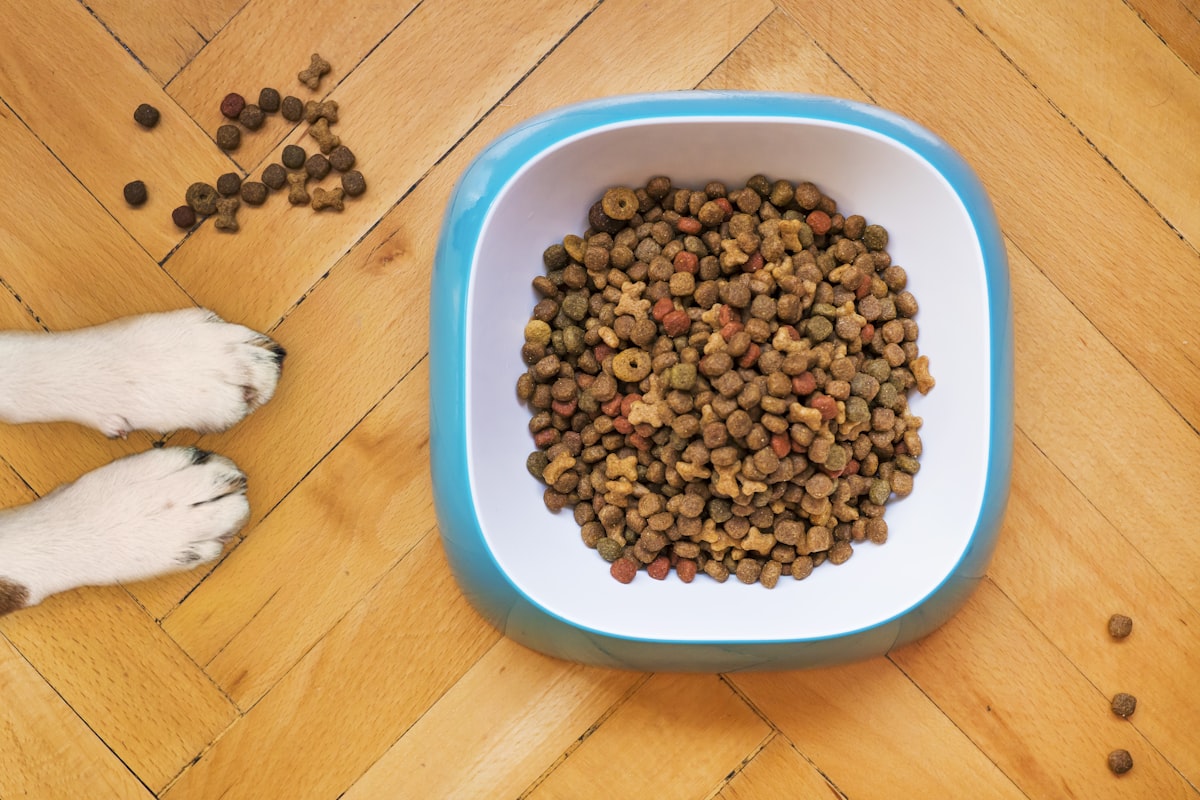
Sidewalk chicken, dropped french fries, mystery tissues, the cat's dignity — your dog believes the earth is an all-you-can-eat sample table. Leave it (Lass Es if you train in German) is how you cancel that buffet. Without it, every walk is a snack scavenger hunt & every "drop it" turns into a negotiation with someone who has teeth & optimism.
I teach leave-it as a game first, not a panic button in traffic. Start easy: treat in a closed fist, he noses, he backs off, YES!, pay from the other hand. He learns: ignoring that thing earns a better thing. Then the treat on the floor under your shoe. Then a visible treat he must walk past. Then sidewalk distractions on a leash. Proof it. Do not debut the command when he already has a burrito in his mouth & you are late for work.
Leave It vs Drop It
Leave it = do not take it. Drop it = spit out what you already committed to. Different skills. If you punish him after he finally drops the sock, you poison the drop. Trade up. Mark the release. Celebrate like he cured boredom. Same rule as recall: coming clean must pay.
Keep It Fair
- Start easy indoors. Win first. Then add difficulty.
- Mark the decision to disengage. Not the staring contest.
- Pay well. Sidewalk pizza needs a better counter-offer.
- Never chase & scream. That is cardio for the wrong mammal.
Works hand-in-hand with basic obedience commands. The world will keep dropping food. You can keep declining the invitation.
Leave it turns the planet from a buffet into a place you walk through on purpose. Teach it early, pay it well, & save drop-it for the stuff already acquired — without turning either command into a trap.
Photos in this post are from Unsplash (free to use).
Pulling on the Leash Is Not Your Cardio Plan
Thursday, August 27th - 4:45pm
If your shoulder has a better workout plan than your dog has a heel, something is backwards. Pulling is not "excitement." It is a dog practicing the rule: lean in, the world moves closer. Every squirrel, smell, & neighbor with a sandwich becomes a tow-truck job — & you become the trailer hitch. Cute at twelve weeks. At eighty pounds it is how you invent physical therapy.
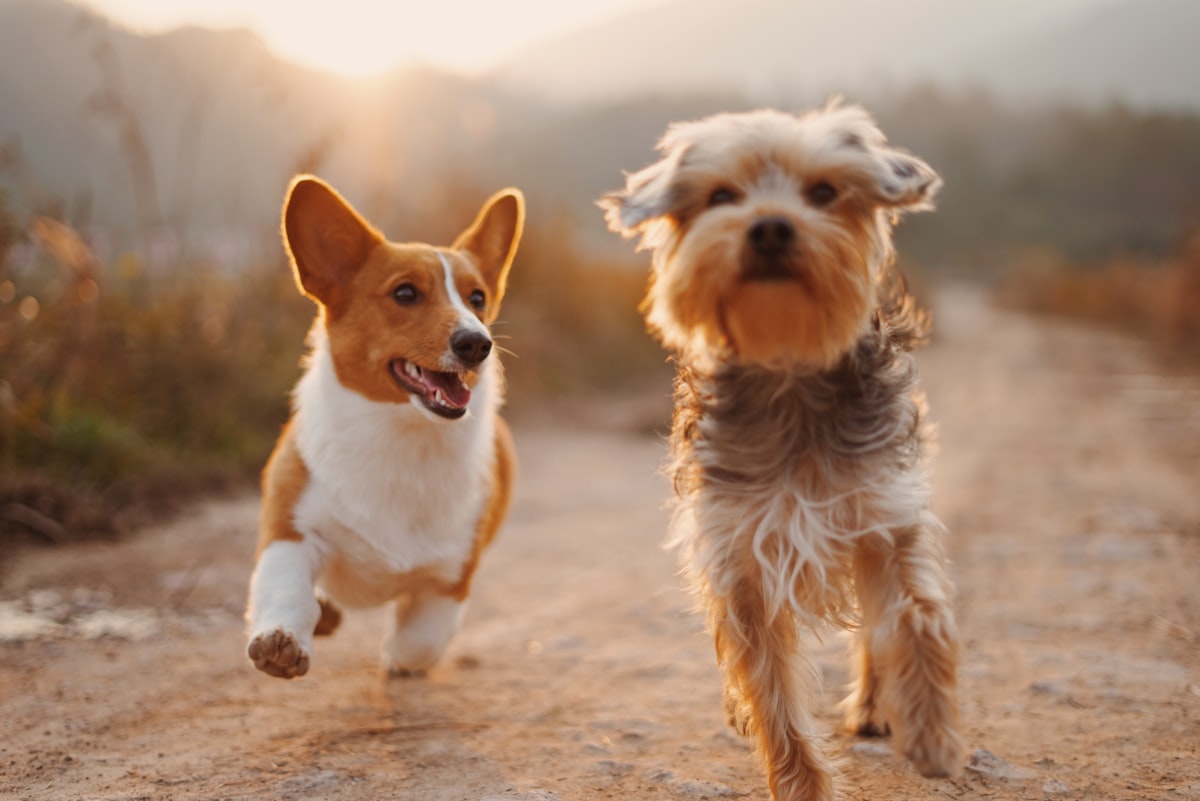
I do not negotiate with a water-skier. Loose leash is a skill. We start boring: backyard or quiet sidewalk, short sessions, mark the moments the leash goes soft. Verbal YES! the second the slack appears, then praise. If he hits the end of the leash like it owes him money, we stop. Forward motion is the paycheck. Pulling pauses the parade. Nobody is yelling. We are just being deeply unimpressed.
Gear Helps. Clarity Helps More.
A flat collar & a leash you can actually hold beat seven retractable lightsabers. Retractables teach "anywhere is fine." I want a clear zone: beside me is gold. Surging ahead is a dead end. For strong pullers I may use training tools I know how to use fairly — never as anger, always as information. If you do not know the tool, do not buy the tool. Hire someone who does, or keep it simple & consistent until the basics stick.
What Brand-New Owners Should Do Tonight
- Shorten the session. Five good minutes beat a twenty-minute argument with a bush.
- Mark slack, not hope. YES! when the leash softens — not when you wish it would.
- Be a tree when he pulls. No forward. Boring works.
- Practice before the dog park. The world is not your first classroom.
More structure lives in basic training & outdoor obedience. Your rotator cuff is not a training aid. Loose leash is.
Pulling pays him in scenery. Soft leash pays him in progress. Stop the parade when the line goes tight, mark the slack, & keep sessions short enough that everybody still likes each other at the door.
Photos in this post are from Unsplash (free to use).
The Dog Park Is Not a Training Plan
Thursday, August 27th - 4:20pm
Dog parks are great for dogs who already have manners — & chaotic for dogs who are still writing the first draft of their personality. If your plan is "he will socialize it out," congratulations: you just enrolled him in a free-for-all taught by whoever showed up with the loudest collar. Socialization is controlled exposure. A dog park is a nightclub with tennis balls.
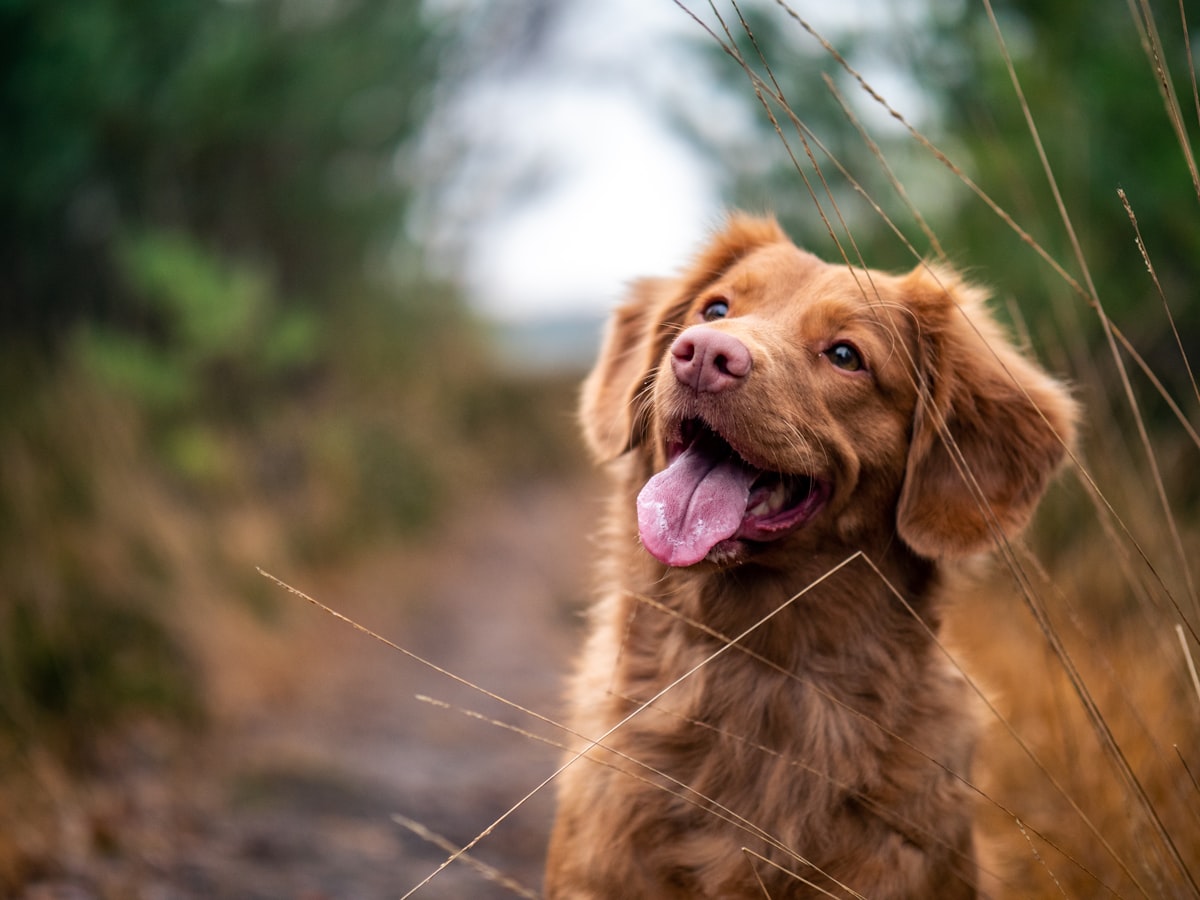
I like dogs to meet dogs. I like it on my terms first: calm on leash, able to hear a recall, able to leave when I say leave. If he cannot come away from a leaf, he is not ready for a pack of strangers doing interpretive wrestling. That is not fear. That is sequencing. Kitchen sit before park sit. Living-room calm before freestyle mosh pit.
What Socialization Actually Means
Socialization is "see the thing, stay under threshold, get paid for good choices." It is not "throw him in & hope." Puppies need people, surfaces, sounds, gentle dog introductions — not a weekend of being steamrolled by an unfixed adolescent who never learned personal space. Adult dogs need the same honesty: if he practices panic or bullying at the park, he is training those things. Practice makes permanent. Including the bad stuff.
A Better Field Trip Order
- Obedience first. Sit, down, come, leash manners — boring reliability.
- Quiet public places next. Parking lots, sidewalks, distance from other dogs.
- Structured play with known dogs. Friends, trainers, calm matches — not random roulette.
- Dog park last, optional. Some dogs never need it. That is allowed.
Read puppy training & outdoor obedience before you treat the park like daycare with higher stakes. Your dog does not need more chaos. He needs a leader who picks the classroom.
The dog park is dessert, not the recipe. Build the manners, proof the recall, then decide if freestyle play is even on the menu. Hope is not a curriculum.
Photos in this post are from Unsplash (free to use).
If Mom Says No & Dad Says Yes, the Dog Says Gotcha
Thursday, August 27th - 3:55pm
Dogs are professional loophole attorneys. If one person allows couch parkour & another person scolds it, the dog does not learn nuance. He learns which human is the soft vending machine. Mixed rules feel like kindness. They train chaos. Then everybody argues in the kitchen while the dog plans Act Two with a shoe.
Pack leadership is not just "me & the dog." It is the whole household. Kids, housemates, grandparents who "cannot resist those eyes" — if they feed from the table, allow jumping, or unlock the door rules, they are co-authors of the behavior. I would rather have simple rules everyone enforces than fancy commands nobody backs up on Tuesday.
Hold a Five-Minute Family Summit
Pick the non-negotiables: jumping, doors, furniture, feeding, begging, crate. Write them somewhere embarrassing like the fridge. Same release word. Same "off." Same "no." If German commands are your house language, everybody learns the same three words or you stick to English until the humans are fluent. The dog should not need a translator & a calendar.
Fair Beats Constant Negotiation
- Agree on the rules when the dog is not in the room. Humans first. Furry lobbyist second.
- Same markers. YES! means yes. Nein / No means stop. OK means free.
- No secret treaties. "Just this once" is how once becomes policy.
- Kids get jobs they can do. Ask for a sit before petting — with adult backup.
This pairs with pack leadership & the house-rules phase I talk about with Oso. Love him. Also stop running two different governments under one roof.
If the humans disagree, the dog votes for whatever pays better. One rulebook, many enforcers, zero secret cookies under the table. Consistency is kindness with a spine.
Photos in this post are from Unsplash (free to use).
Your Dog Loves You. That Does Not Mean He Works for You.
Wednesday, August 26th - 8:05pm
If you have never really trained a dog, here is the plot twist nobody puts on the adoption paperwork: your dog can adore you & still run the house like a tiny, furry HOA. Love is easy. Dogs are good at love. Respect is the other thing — the one where he actually does the sit instead of blinking at you like you just asked him to file taxes.
I train firm-but-fair. That is not code for "mean." It is code for: I am kind, I am consistent, & I am not holding a committee meeting about whether the couch is a launch pad. Pack leadership is the prerequisite. Before fancy heelwork, before German commands, before anybody says the word Schutzhund at a barbecue — you have to be the one in charge of the daily schedule.
Nothing In Life Is Free (Yes, Even Dinner)
I use a simple rule called NILIF: Nothing In Life Is Free. Food, play, affection, going through the door — he works for it. Bowl goes down, he sits, he waits, I say OK, then he eats. Same idea at the front door: I go first. The pack leader leads. If he tries to squeeze past me like we are boarding a Southwest flight, the door closes & he hears Nein (German for no). We try again. Nobody is angry. Nobody is giving a TED Talk. We just repeat until he figures out the universe has a bouncer, & the bouncer is me.
You do not need a clicker glued to your palm. I mark the good stuff with a verbal YES! the second it happens — then praise. If you mark late, you just rewarded the next random thing, which might be sniffing a crumb or plotting a coup.
What This Looks Like If You Are Brand New
- Pick the rules & keep them. Jumping is cute at 12 weeks. At 80 pounds it is a contact sport.
- Make him earn the good stuff. Sit for the bowl. Sit for the leash. Sit for "okay, now I will love on you."
- Go through doors first. You are not being dramatic. You are teaching who leads the parade.
- Be fair. If you let it slide on Tuesday because he was cute, you taught him Tuesday is a loophole.
Read the longer version on pack leadership when you are ready. For tonight: love him lots. Also make him wait for dinner. Those two things are allowed to coexist. Your dog will survive. Your rug might even thank you.
Love is the easy part. Respect is the job. NILIF, doors, a clean YES!, & a release word — that is how a first-time owner stops being the intern in their own house.
Photos in this post are from Unsplash (free to use).
He Knows Sit in the Kitchen. The Park Does Not Care.
Wednesday, August 26th - 7:35pm
Your dog is not gaslighting you. He really does sit in the kitchen. He also really does turn into a furry Roomba the second a squirrel files a flight plan. That is not spite. That is an untrained environment. Indoor sit & outdoor sit are, to a dog, two different college courses that happen to share a name.
I teach commands in four phases. If you have never trained a dog, this is the map. Skip a phase & you get coincidental obedience — the "he does it sometimes" special, which is adorable until you need it.
The Four Phases (No Mysticism, I Promise)
- Learning. Teach it somewhere boring. Kitchen. Hallway. I use a verbal marker: I say the command, the second the butt hits the floor I say YES!, then "Good sit!" I train my German Shepherds in German later (Sitz = sit, Platz = down) because it is handy for sport work — but English works. One word. Same word. Every time. Do not narrate a novel.
- Distraction. Now make life slightly annoying. Kids with a ball. Someone opening a chip bag. Then take the same command outside & treat it like a brand new command, because to him it is. Patience is not optional. Patience is the whole sport.
- Correction. Only after he truly knows it. If he has never learned it, a correction is just weather. If he knows it & blows you off, now we have a conversation. Fair pack leaders do not punish confusion. They also do not shrug at a known command that got ignored.
- Maintenance. Training is not a diploma you hang over the crate. When a command gets sloppy, you walk it back through the steps. Think of it as brushing his teeth, except the teeth are his brain.
The Outdoor Plot Twist
Outside is a nightclub. Birds. Bikes. Other dogs doing interpretive dance. Smells that should be classified. So when I take a dog from kitchen sit to park sit, I start over: short sessions, mark the win, add a little time, then a little distance. I do not yell the kitchen word louder. Volume is not a training tool. It is a confession that the homework was not done.
Want the longer lesson? Start with basic training & then outdoor obedience. Your living room is the easy quiz. The world is the final.
If he only sits when the fridge is involved, he does not "know sit." He knows the kitchen. Teach it, distract it, correct only what he already understands, & keep it sharp. The squirrel is not impressed by your indoor highlights reel.
Photos in this post are from Unsplash (free to use).
If You Punish a Come, You Just Trained a Runaway
Wednesday, August 26th - 7:05pm
Recall — "come here" — is the most important command you will ever teach. Not because it looks fancy. Because it is the difference between "good boy" & a conversation with a Honda Civic. If you have never trained a dog, please tattoo this on the inside of your patience: never punish a dog for coming to you.
Dogs learn from the thing that happened right before the consequence. If he finally gallops over & you scold him for the squirrel tour he took first, he hears: coming to you = bad news. Next time he will keep the squirrel. You just paid him to stay gone. If he needs a correction, you go to him. You do not lure him in & then become the weather.
How I Teach It Without Magic
I get it solid indoors first — same marker as everything else. Command. He comes. YES! Party. Food, toy, dumb happy voice, whatever he actually wants. Then a long line, about 25 feet, on a collar. We go outside. Tiny distractions. Then bigger ones. Kids. Other dogs at a distance. That one leaf that is clearly a threat to national security. Only when it is boringly reliable do I even think about off-leash in public. A 90-pound German Shepherd doing interpretive sprinting down the block is not "freedom." It is a neighborhood newsletter.
The 1.5-Second Rule (This One Saves Marriages)
Corrections after the fact do not train the crime. They train your mood. If you come home, find the trash festival, & then lecture the dog, he is reacting to you being upset — not to 2pm's poor life choices. I want the correction within about a second and a half of the behavior, or I skip it & set up a better rehearsal next time. Catch him in the act. Redirect. Mark the right choice. Repeat until he is less of a defense attorney.
Same energy as chewing: I do not wait until the remote is a convert to the chew-toy religion. I set up the situation, say Lass Es (leave it), hand him the legal toy, mark it. Boring. Effective. Slightly less expensive than a new remote.
More on recall living in the real world: Come Back Here You Dog. More on the overall method: training articles.
Come has to be the best news of his day. Mark it, pay it, proof it on a long line, & never turn it into a trap. You can be firm. You can be fair. You cannot be both if you punish the one command that can keep him alive.
Photos in this post are from Unsplash (free to use).
Meet Oso: House Rules Boot Camp (Formal Training Starts Soon!)
Wednesday, June 24th - 6:15pm
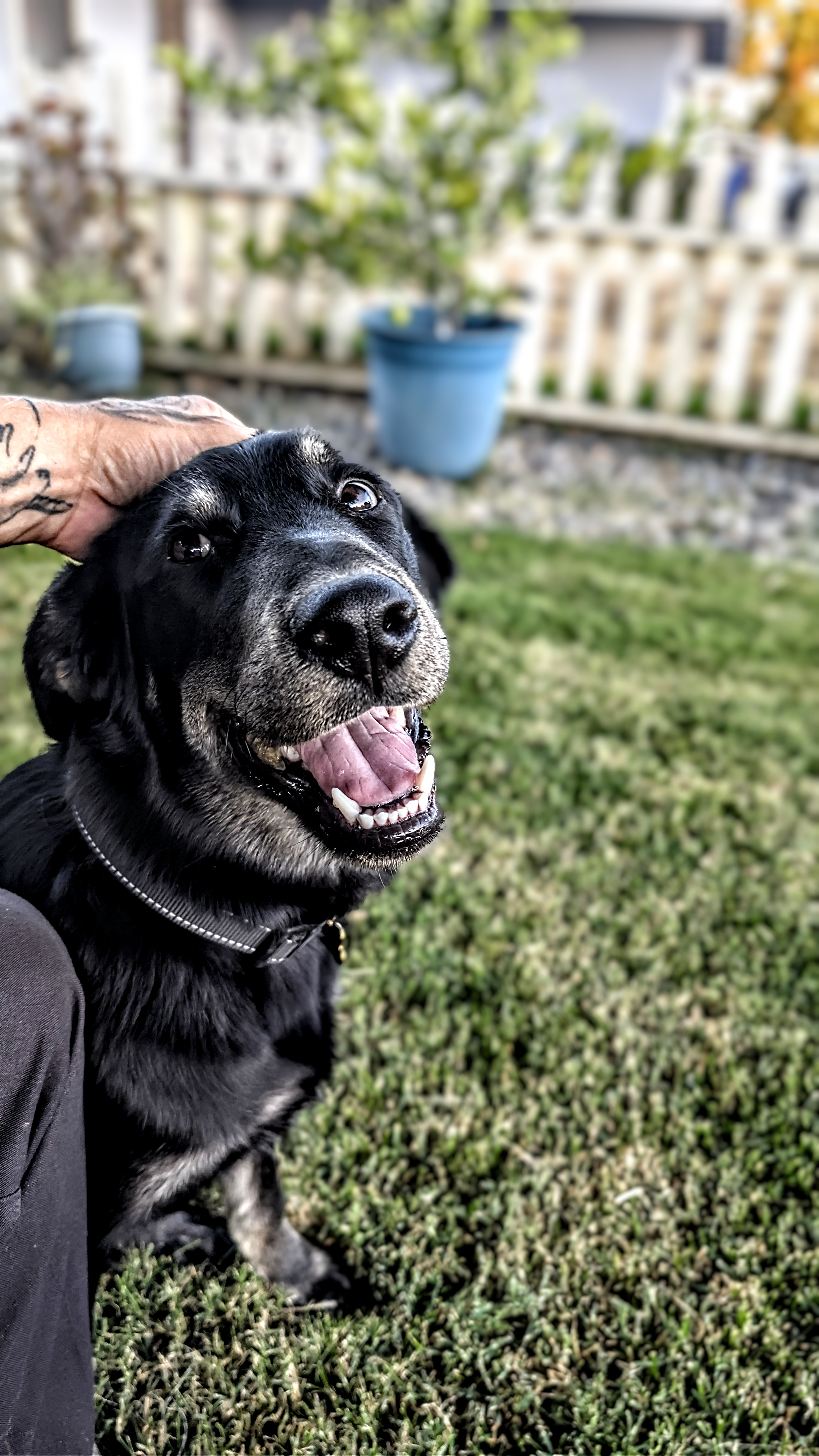
There is a new roommate in my house, & he has never paid a single dollar of rent. His name is Oso. He is six months old, weighs roughly "enough to knock over a folding chair," & is allegedly a German Shepherd / Golden Retriever mix — which, if you know dogs, means he has the work ethic of a GSD & the optimism of a Golden. In other words: he is very serious about his hobbies, & his hobbies are chewing, sprinting, & looking at me like I am the one who needs obedience training.
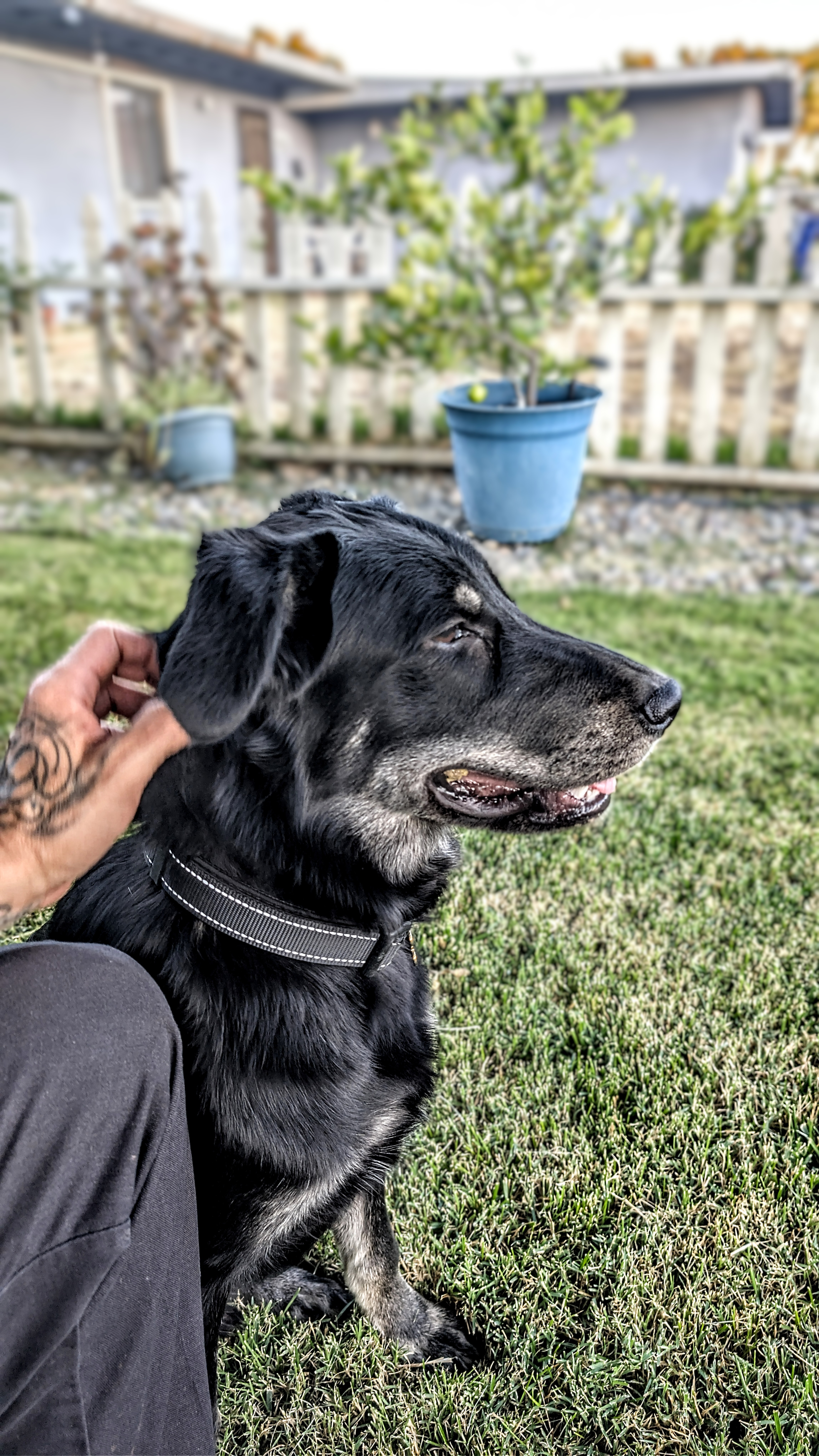
Oso belongs to my housemate, which is perfect, because I love dogs & I also love not being solely responsible for every chewed shoelace in a twenty-foot radius. Right now we are not doing formal training yet — no heelwork, no long down-stays, no fancy stuff. We are in what I professionally call the House Rules Phase, also known as: please do not treat the living room like an off-leash dog park with furniture.
Current Curriculum: Indoor Survival Skills
Think of it as Puppy Community College before the university semester starts. We are covering the basics:
- Where to potty: Outside = good. Rug = a personal betrayal.
- What is chewable: Toys = yes. Remote controls = absolutely not, no matter how confident he looks holding one.
- How to greet humans: Four paws on the floor. Not two paws on the floor & two paws on my sternum.
- Inside voice: Barking at the mail truck is optional. Barking at the dishwasher is not a career.
He is making progress! Some days he nails it & I feel like a genius dog trainer. Other days he discovers a new household object & stares at it like it personally insulted his bloodline. Then he tries to herd it. Then he tries to befriend it. Then he tries to eat it. This is the GSD/Golden cocktail in action: investigate, commit, celebrate.
Why I'm Actually Excited About This Mix
Look, I'm Team GSD all the way — you know that if you've read my other posts — but I'm not mad at a little Golden Retriever in the recipe. Goldens bring social skills. GSDs bring focus. Put them together & you get a dog who wants to learn and wants everyone in the room to be proud of him while he learns it. Oso is smart, curious, & already figuring out which human is the Soft Touch (not me) & which human is Firm But Fair (definitely me).
That last part is important. Puppies are adorable little lawyers. They will appeal every ruling. "But I only chewed the corner of the rug." "But I only jumped on you because I missed you for four entire minutes." "But the cat started it." I respect the effort. I deny the motion.
Formal Training Is Coming Soon
House rules are the foundation — you cannot build obedience on chaos. Once Oso has the indoor basics down (or at least down enough that we can sit on the couch without negotiating treaty terms), we'll move into real training: leash manners, recall, structured impulse control, & all the good stuff that turns a sweet, rowdy six-month-old into a dog you can trust in public.
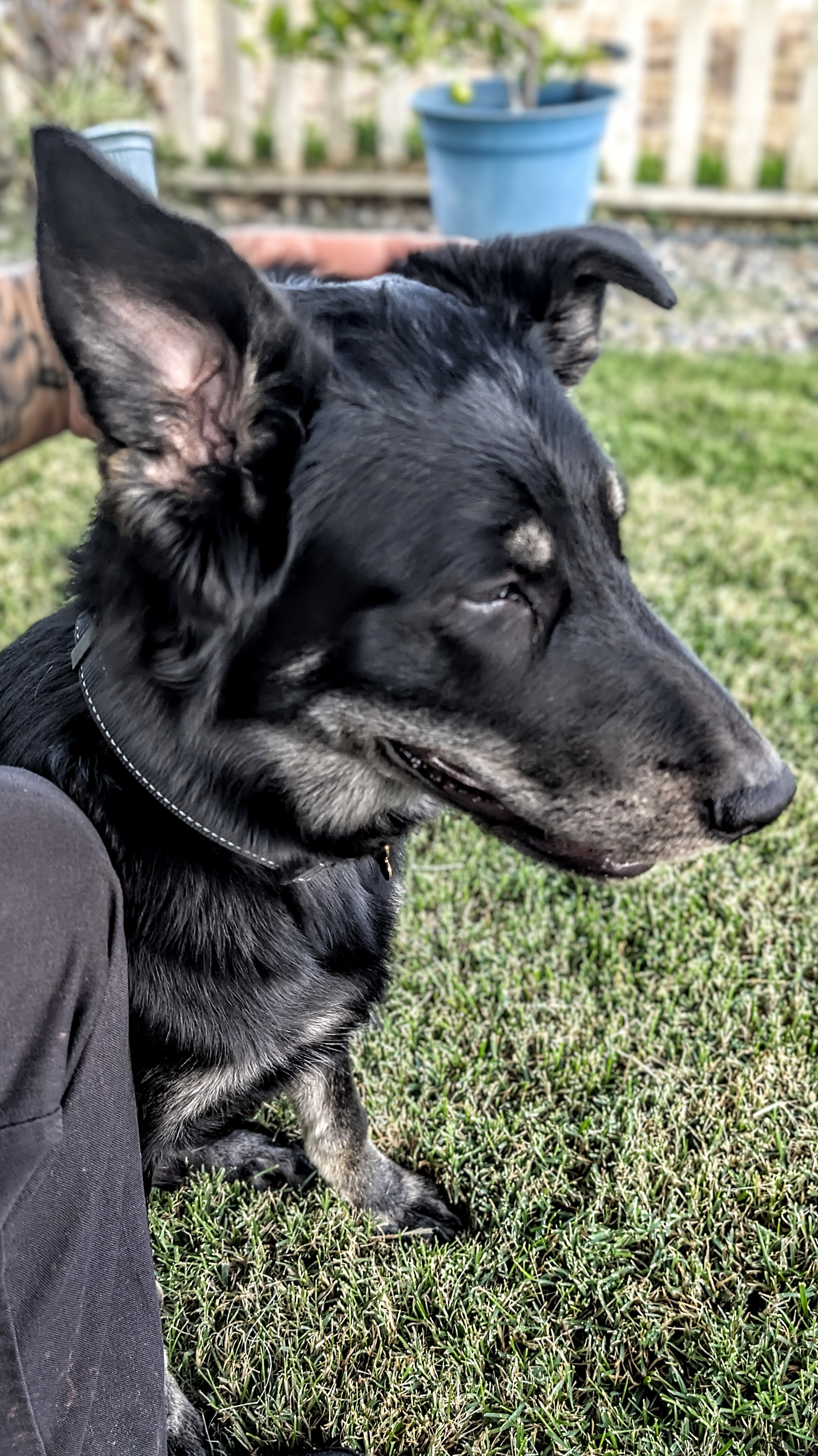
I'll be chronicling the whole journey here, because if there's one thing I've learned from years of working with high-drive dogs, it's this: training is never boring. Sometimes it's triumphant. Sometimes it's humbling. Sometimes it's both before breakfast.
Stay tuned — Oso's formal training starts soon, & I have a feeling this pup is going to be a lot of fun to work with. Just... if you see me in the yard doing leash drills while a fluffy menace tries to recruit a garden hose as his business partner, wave. Moral support is appreciated.
House rules first. Obedience next. World domination (politely, on a loose leash) after that.
I Miss Schutzhund!
Tuesday, March 28th - 7:44pm
Schutzhund is a German term meaning "protection dog," and Schutzhund training is a sport that involves teaching dogs to excel in obedience, tracking, and protection work. It is a demanding and rigorous training regimen, but for those who love dogs and enjoy working with them, it can be incredibly rewarding. In this blog post, I will explore my personal desire to once again train dogs in Schutzhund.
My History with Schutzhund Training
I have been a dog lover all my life, and I was first introduced to Schutzhund training over a decade ago. At the time, I was immediately drawn to the sport, and I began working with several dogs in obedience, tracking, and protection work. I found the training to be challenging, yet incredibly fulfilling, and I loved watching the dogs grow and develop as they progressed through the program.
Eventually, life got in the way, and I had to step away from Schutzhund training for a time. However, the desire to return to the sport has never left me. I miss the challenge of training dogs to perform at their highest level, and I miss the camaraderie of working with other Schutzhund enthusiasts.
Why I Want to Return to Schutzhund Training
There are several reasons why I want to return to Schutzhund training. First and foremost, I love working with dogs, and I find the training process to be incredibly rewarding. I enjoy the challenge of teaching a dog new skills and watching as they master each task.
Secondly, I appreciate the sense of community that Schutzhund training provides. Schutzhund enthusiasts are a tight-knit group, and the friendships that are formed through training and competition are truly special.
Finally, I believe that Schutzhund training can help dogs develop confidence and self-assurance. Dogs that have been trained in Schutzhund are well-behaved, obedient, and have a strong sense of purpose. They are confident in their abilities and are able to handle a variety of different situations with ease.
Schutzhund training is not for everyone, but for those who are passionate about working with dogs, it can be an incredibly rewarding experience!
Firm But Fair - that's MY Training Technique
Tuesday, March 28th - 7:28pm
When it comes to dog training, there are many different approaches that one can take. Some people advocate for a gentle, positive-reinforcement approach, while others believe in a more assertive, firm-but-fair style of training. In this blog post, we will explore the concept of firm-but-fair dog training, and discuss some tips for implementing this approach.
What is Firm-But-Fair Dog Training?
Firm-but-fair dog training is a style of training that emphasizes the importance of clear boundaries and consistent expectations for a dog's behavior, while also being kind and compassionate. This approach is not about being overly harsh or punishing a dog, but rather about setting clear rules and limits and holding a dog accountable for their behavior.
Tips for Firm-But-Fair Dog Training:
- Be Consistent: One of the most important aspects of firm-but-fair dog training is consistency. This means setting clear rules and expectations for your dog's behavior, and being consistent in enforcing them. If you allow your dog to jump on you sometimes but not others, or if you let them get away with certain behaviors one day but not the next, this can be confusing and frustrating for your dog.
- Positive Reinforcement: While firm-but-fair training emphasizes the importance of setting clear boundaries, it is also important to use positive reinforcement to encourage good behavior. This can include treats, praise, and affection when your dog behaves well.
- Avoid Punishment: While it is important to hold your dog accountable for their behavior, it is not necessary to punish them harshly when they make mistakes. Punishment can lead to fear and anxiety in dogs, and can damage the bond between you and your furry friend.
- Communicate Clearly: Dogs rely on clear communication to understand what is expected of them. Using consistent verbal and nonverbal cues, such as hand signals or body language, can help your dog understand what behaviors are acceptable and what behaviors are not.
- Set Realistic Expectations: It is important to set realistic expectations for your dog's behavior based on their breed, age, and personality. Some dogs may be more prone to certain behaviors, such as barking or jumping, and may require more training and patience than others.
In conclusion, firm-but-fair dog training is a style of training that emphasizes clear boundaries, consistent expectations, positive reinforcement, and effective communication. By implementing these tips, you can create a strong bond with your dog while also ensuring that they are well-behaved and happy.
First Post!
Tuesday, March 14th - 11:28am
I am looking forward to getting my next German Shepherd puppy, as soon as I'm able to. Once I get my new place, & I have enough room for me & my dog, I'll begin my search for the perfect puppy for me, from one of the many quality, professional breeders that I know of.
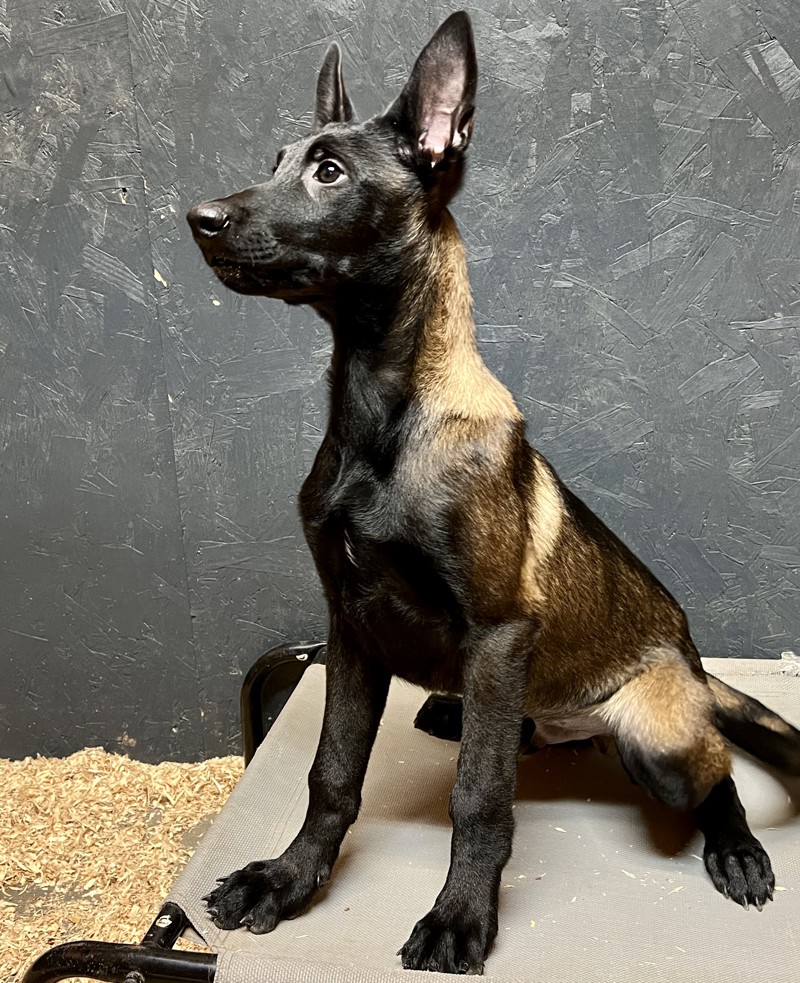
My landlord has asked me to train his new Belgian Malinois that he'll be getting. I can't wait! I'll definitely be blogging about it!!! I've worked with high-drive German Shepherd Dogs, both puppies & adults, & I've raised them myself, so I'm dying to see the main differences between the two breeds.
Do I Want A German Shepherd Dog, or Belgian Malinois?
Hmmm...great question! For me, I'm Team GSD all the way, & my next dog will definitely be a German Shepherd, but I'm sure I'll be adopting a Belgian Malinois at some point in my life. While both breeds are highly intelligent, loyal, & protective, & both breeds can be high-energy dogs, a German Shepherd Dog can tend to be a bit calmer, & are the preferred dog, for the casual lifestyle.
More to come!
I hope my dog training experiences will be a blessing to your own dog training, & I hope it will benefit your relationship with your dog, as well!